

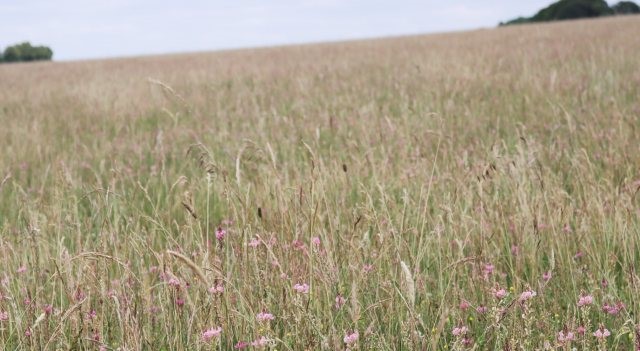
With several actions available under the Sustainable Farming Incentive (SFI), keeping track of what each scheme offers can sometimes feel overwhelming. Each action has been designed to deliver different environmental benefits while supporting farm productivity. One option that has been gaining increasing attention is SAM3 Herbal Leys, which sits under the wider category of SFI actions for soil. SAM3 is also considerably more flexible than its CSS sister scheme GS4, which can be very strict and regimented in terms of when it can be grazed.
SFI26 update: The published payment rate is £224.00 per hectare per year. Always check the latest SFI26 guidance, as scheme requirements and payment rates may change in future updates. — Bright Seeds, published August 2026.
What Is the SAM3 Herbal Leys Scheme?
The SAM3 Herbal Leys scheme is an SFI action designed to improve soil health by establishing diverse grassland containing grasses, legumes, and deep-rooting herbs.
These mixtures improve:
-
Soil structure
-
Soil biology
-
Soil fertility
-
Carbon storage
The different rooting depths help break up compacted soils while increasing organic matter and nutrient cycling. For livestock farmers, the major advantage is that the land remains productive and usable for grazing or forage production.
Unlike some of the other SFI schemes that mean taking land out of production, SAM3 is a lot more flexible. Ultimately, it means livestock farmers can still farm pretty much as they were. And, in our opinion, it is a good scheme for new entries.
SAM3 Herbal Leys Payment Rate
Farmers entering the scheme receive:
SFI26 update: The published payment rate is £224.00 per hectare per year. Always check the latest SFI26 guidance, as scheme requirements and payment rates may change in future updates. — Bright Seeds, published August 2026

SAM3 SFI Herbal Ley
This payment is designed to support the establishment and management of herbal leys while delivering soil health benefits.
Because the land can still be grazed or cut for silage or hay, farmers can generate additional income or reduce feed costs alongside the scheme payment.
Why Herbal Leys Work Well on Livestock Farms
Herbal leys are particularly valuable in grazing systems because they offer both agronomic and environmental benefits.
Key advantages include:
1. Flexible grazing and cutting
Unlike some other schemes, herbal leys under SAM3 can be grazed or cut whenever the farmer chooses once established.
2. Improved soil fertility
Legumes such as clover help fix nitrogen naturally, reducing fertiliser requirements.
3. Better drought resilience
Deep-rooting herbs like chicory and plantain help plants access water and nutrients deeper in the soil.
4. Rotational benefits
After the three-year period, the improved soil condition can benefit the next crop or grass reseed.
Land Eligible for SAM3 Herbal Leys
The scheme can be applied to several types of farmland, including:
-
Arable land
-
Temporary grassland
-
Improved permanent grassland
This flexibility allows farmers to incorporate herbal leys into existing grazing systems or crop rotations.
Land that cannot be entered into the scheme – some areas are not suitable for this action.
-
If a Site of Special Scientific Interest (SSSI)
-
Contains historic or archaeological features identified in your SFI HEFER assessment
Farmers should also avoid entering peaty soils, defined as soils with 20% or more organic matter to a depth of 40 cm or more, as herbal leys may damage peatland environments.
Rotational Flexibility
SAM3 is a rotational SFI action, meaning farmers can choose how they implement it.

SAM3 Herbal Ley with Grass
You can either:
-
Use the same field for the full three-year agreement, or
-
Move the herbal ley around the farm each year
This makes it easier to integrate with existing grassland management and crop rotations.
What Farmers Need to Do
To meet the requirements of the scheme, farmers must:
-
Establish and maintain a herbal ley mixture containing grasses, legumes, and herbs
Existing herbal leys may qualify only if they are not already funded through another environmental scheme.
When Herbal Leys Must Be Established
If the herbal ley remains in the same field for the entire three-year SFI agreement, farmers must:
-
Establish the ley within the first 12 months
-
Maintain it throughout the remainder of the agreement
If the action is rotated around the farm, it must remain in place long enough each year to deliver the soil improvement benefits expected by the scheme.
Keep Evidence for SFI Compliance
As with all SFI actions, farmers should keep clear records of the work carried out.
Recommended evidence includes:
-
Seed mixture details
-
Establishment dates
-
Field management records
-
Photographs of the crop
This documentation helps demonstrate compliance during any inspections.
Need Help Choosing the Right Herbal Ley Mix?
Selecting the right herbal ley seed mixture is key to getting the most out of the scheme. At Bright Seeds we offer the following seed mixtures.
- CSAM3 | SAM3 | GS4 Herbal Ley
- CSAM3 | SAM3 | GS4 Herbal Ley with Grass
- CSAM3 | SAM3 | GS4 Eco Herbal Ley
For further advise and guidance on selecting the right mix for your scheme, please get in touch and we can help you select the right mixture.
Download our Game, Conversation and Wildflower Brochure 2026 – Reference Page 46
FAQ: SAM3 Herbal Leys
-
How much does SAM3 herbal leys pay?
The SAM3 herbal leys action pays £224.00 per hectare per year under the Sustainable Farming Incentive. SFI26 update: The published payment rate is £224.00 per hectare per year. Always check the latest SFI26 guidance, as scheme requirements and payment rates may change in future updates. — Bright Seeds, published August 2026
-
Can herbal leys be grazed?
Yes. Once established, SAM3 herbal leys can be grazed or cut for forage whenever required.
-
What plants are included in herbal leys?
Typical herbal ley mixtures include grasses, legumes such as clover, and herbs like chicory and plantain.
-
Can I overseed existing grassland?
Yes. Farmers can establish new leys or overseed existing grassland with a herbal ley mixture.
Blog Updated September 2026, in line with SFI Herbal Leys 2026 Payment Rates.
